
Ai News Artificial Intelligence has evolved into the core of the digital realm. It is no longer an idea of the future exclusive to technology lovers or researchers. By 2025, AI has established itself as a crucial foundation of innovation, effectiveness, and disruption in all industries. Across healthcare and education, as well as defense and digital marketing, AI is swiftly changing the ways we live, think, and work.
Its algorithms are now deeply integrated into our daily lives, driving our vehicles, managing our finances, enhancing our smartphones, and influencing the content we encounter each day. The capacity of AI to learn, adjust, and develop based on data is what renders it more formidable than any earlier technological wave. The most notable aspect of AI today is its ability to produce innovative concepts, automate decisions, and provide outcomes quicker and with greater precision than any human team.
The Age of Advanced Language Models
In recent years, large language models have achieved massive breakthroughs, and 2025 has brought even more advanced capabilities. These models are not just capable of generating text—they can understand tone, mimic human emotion, summarize legal documents, translate languages with context, and engage in real-time conversations.
The launch of models like GPT-5 and Claude Next have marked a new era of linguistic computing where AI can write novels, code software, conduct academic research, and draft policies with remarkable fluency. Their widespread use across businesses, law firms, academic institutions, and media houses illustrates how language models have moved beyond the lab and into real-world applications. Enterprises now rely on AI for customer service automation, report writing, and decision-making tools, increasing productivity while minimizing human error.
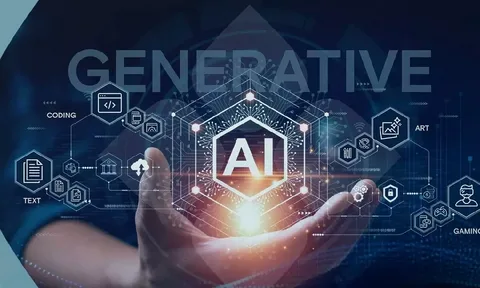
Generative AI: A New Creative Revolution
AI News has transcended its limitations of just numbers and logic; it has become a creative collaborator for designers, filmmakers, musicians, and content creators. Generative AI tools have created a new realm of art where creativity intersects with technology. Platforms such as Midjourney and OpenAI’s Sora are capable of generating hyper-realistic images and cinematic videos using only a text prompt.
Authors collaborate with AI News to create novels or generate concepts for articles, whereas marketing firms utilize it to design brand images, develop campaigns, and craft engaging slogans. Artists and composers are working with AI to create rhythms, harmonies, and sound effects, transforming basic concepts into symphonies. This creative empowerment is not only opening up access to design tools for all but also dismantling the conventional barriers to industries that were previously exclusive to highly skilled professionals.
AI in Healthcare: A Medical Renaissance
The healthcare sector may have gained the most from AI News in recent years. By 2025, AI has emerged as a crucial resource for diagnostics, patient monitoring, treatment planning, and drug development. Deep learning algorithms currently examine medical images with remarkable accuracy, identifying tumors, fractures, and irregularities much sooner than the human eye is capable of. AI chatbots assist patients by evaluating symptoms and suggesting subsequent actions through real-time data analysis.
AI-powered wearable devices track vital signs such as heart rate, blood pressure, and oxygen levels, notifying doctors and caregivers prior to emergencies. Additionally, pharmaceutical companies have optimized drug discovery, cutting down years of research to months by modeling molecular interactions and forecasting drug effectiveness through AI systems. This has resulted in the creation of more specific treatments for illnesses like cancer, Parkinson’s disease, and uncommon genetic disorders.
Transforming Education Through Intelligent Learning Systems
AI has transformed the understanding of learning. Conventional classrooms are swiftly being replaced by intelligent learning settings where AI instructors evaluate student progress, customize teaching strategies, and offer immediate feedback. In 2025, AI is regarded not merely as an additional resource in education but as a fundamental element of academic achievement. Learners of all ages gain from adaptive learning systems that modify lesson difficulty according to personal advancement.
Language obstacles are reduced via instant translation, ensuring worldwide education is available for everyone. AI aids teachers by streamlining tasks like grading, curriculum creation, and performance analysis, allowing them to dedicate more time to student engagement. Virtual reality (VR) and artificial intelligence (AI) now work together to replicate real-life situations for medical students, pilots, and engineers, producing engaging training environments that were previously unfeasible in classroom settings
AI in Business: Reshaping Workflows and Strategy
In the business realm, AI News has shifted from being a luxury to an essential tool. In 2025, every progressive organization has integrated AI into its business framework. AI tools provide practical insights that enhance profit and performance, ranging from supply chain optimization to predictive analytics. Retailers employ AI to analyze purchasing habits, predict demand, and customize suggestions.
Financial organizations utilize machine learning for detecting fraud, assessing creditworthiness, and executing algorithmic trading. Human resources teams utilize AI for recruiting, resume evaluation, and employee involvement, guaranteeing cultural fit and minimizing attrition.
Additionally, AI-powered business intelligence systems allow executives to make informed decisions in seconds, providing dashboards that showcase important trends, risks, and opportunities. These tools have become essential for managing the intricacies of worldwide markets and consumer demands.
Smart Cities and the Integration of AI in Public Life
Smart cities are emerging as a reality due to the integration of AI with the Internet of Things (IoT). AI-driven systems now manage urban planning, traffic control, waste management, and energy use, adapting dynamically to the needs of the population.
Traffic signals adjust according to current traffic data, monitoring systems improve public safety by detecting suspicious behavior, and energy providers streamline power distribution to reduce waste. By 2025, cities such as Tokyo, Dubai, and Amsterdam demonstrate how AI can enhance urban living by making it cleaner, more sustainable, and safer.
Citizens gain advantages from smart public transport networks, AI-driven emergency response teams, and digital governance platforms that streamline administrative processes such as tax submissions and permit requests. The integration of AI and infrastructure is enhancing the resilience and adaptability of cities.
Cybersecurity Challenges and AI Countermeasures
As AI advances, cybersecurity threats have grown increasingly complex. Hackers currently employ AI to create believable phishing schemes, deepfakes, and voice replicas to mislead people and companies. Nonetheless, AI serves as the most powerful defense against these kinds of threats.
Current security systems employ machine learning to identify anomalies, assess behavioral patterns, and avert intrusions before any harm occurs. AI-powered threat intelligence systems oversee millions of data points throughout networks to detect weaknesses and suggest corrective actions instantly.
By 2025, cybersecurity companies partner with AI news laboratories to create models that forecast possible attack paths, simulate breach situations, and educate professionals via engaging cyber war simulations. These proactive defenses are essential as digital identities become central to individual, professional, and governmental functions.
Ethics, Governance, and Responsible AI Development
The moral consequences of AI are more urgent than at any time before. Governments, educational organizations, and technology leaders are currently collaborating to guarantee that AI is created and utilized responsibly.
The AI Act has been implemented by the European Union, requiring transparency, responsibility, and risk management for every AI system. The AI news Accountability Act in the United States requires that AI decisions be explainable in essential fields such as healthcare and criminal justice. Developers must now train models on impartial datasets, record decision-making processes, and ensure auditability.
Public consciousness is increasing regarding AI news ethics, leading to a greater call for fairer and more human-focused technologies. AI news ethics has become a recognized discipline, shaping product design, legal frameworks, and global relations.
Conclusion
AI news is no longer emerging—it is here, it is evolving, and it is transforming our world in ways once considered science fiction. As we move deeper into 2025, artificial intelligence continues to drive innovation across industries, enhance human capabilities, and raise new questions about ethics, identity, and governance. Those who adapt and adopt responsibly will lead the next wave of human progress. AI is not just a tool—it is a revolution that will define generations.